

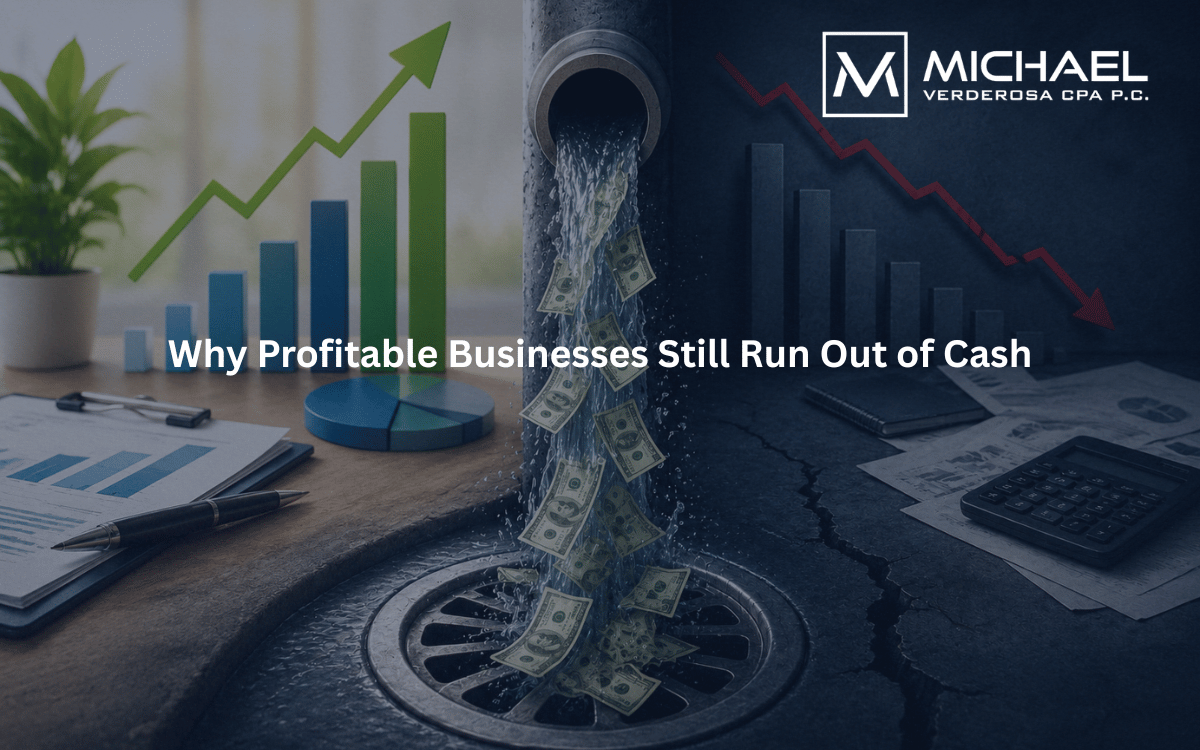
If you’ve ever looked at your year-end numbers, seen a healthy profit, and then wondered why your bank account doesn’t feel healthy at all you’re not imagining it, and you’re not alone. I see this scenario play out with small business owners across Suffolk County more often than almost any other financial puzzle they bring to me. Business is “doing well” on paper. The owner is still stressed about making payroll.
Here’s the truth nobody tells new business owners: profit and cash are two completely different things. Profit is an opinion. Cash is a fact. And the gap between them is where a lot of otherwise successful Long Island businesses get into real trouble.
Profit Is What You Earned. Cash Is What You Actually Have.
Your income statement tells you whether your business made money over a period. But that statement is full of timing assumptions revenue you’ve earned but haven’t collected yet, expenses you’ve incurred but haven’t paid yet, depreciation on equipment that never actually leaves your checking account. None of that shows up as a dollar you can spend today.
Meanwhile, your bank balance doesn’t care about any of that. It only reflects money that has physically moved. So, a contractor in Patchogue can finish a $40,000 job, book it as profits the moment the invoice goes out and still be unable to cover next week’s materials order because the client hasn’t paid yet. On paper, the business looks great. The owner is juggling.
The Usual Suspects Behind the Cash Crunch
A few patterns show up repeatedly when I dig into why a profitable business feels broken:
- Slow-paying customers. If your average client takes 45 or 60 days to pay an invoice, you are essentially financing their business with your own cash. The longer that gap, the more strain it puts on your operations, even if every invoice eventually gets paid in full.
- Inventory sitting on shelves. Money tied up in unsold products is money that isn’t available for anything else. It looks fine on a balance sheet. It’s useless in a crisis.
- Loan principal payments. These catches people off guard constantly. Interest is deductible and shows up as an expense. Principal repayment is not deductible and doesn’t show up as an expense at all, but it absolutely leaves your bank account every month.
- Owners draw that outpaced what the business can support. It’s your company, and you’ve earned the right to pay yourself. But pulling cash out based on what profit “should” support, rather than what cash flow can handle, is one of the fastest ways to starve a growing business.
- Growth itself. This is the one that surprises people most. Growing businesses often need more cash, not less, because you must spend money on inventory, staff, or equipment before the new revenue arrives. Rapid growth without a cash plan can sink a company that looks, from the outside, like it’s thriving.
So, What Actually Fixes This?
The fix isn’t working harder or selling more, though that’s usually where owners go first. The fix is visibility knowing where your cash is going before it’s gone, not after.
A simple cash flow forecast, updated monthly, does more for a small business than almost any other financial habit. It doesn’t need to be complicated. At minimum, you want a rolling 90-day view of expected cash in, expected cash out, and the resulting balance. When you can see three months ahead, you stop reacting to cash problems and start preventing them.
From there, a few habits make a real difference:
- Tighten up your invoicing terms. Net 30 sounds reasonable until you realize most of your clients are paying on day 50. Consider deposits for larger jobs, or incentives for early payment.
- Separate your “profit” mindset from your “cash” mindset when planning owner draws. A good rule of thumb is to base your drawing on what’s sitting in the bank after covering upcoming obligations, not on what last quarter’s P&L said you earned.
- Watch your loan amortization schedule, not just your interest expense. Know exactly how much principal is leaving your account each month, since your books won’t flag it for you.
- Build a cash reserve before you need one. Even a buffer covering one month of operating expenses takes an enormous amount of pressure off slow seasons or late-paying clients.
This is also where it helps to have an Accountant For Small Business IN Long Island, NY owners can call when something doesn’t add up, rather than waiting until tax season to find out a cash problem was building for months.
Why This Matters More on Long Island
Suffolk County businesses deal with a particular mix of pressures seasonal demand swings, higher costs of doing business in New York, and a client base that, in many industries, simply pays slower than the national average. None of that is a flaw in your business model. It just means cash flow planning isn’t optional here; it’s part of the cost of doing business in this market.
The Bottom Line
A profitable business that runs out of cash isn’t failing it’s usually just flying without instruments. The profit and loss statement tells you the story of your past. A cash flow forecast tells you what’s coming. Smart business owners use both, but they make decisions based on the one that’s sitting in the bank.
If you’ve ever stared at a profitable year-end statement and still felt nervous about next month, that feeling is data. It’s telling you it’s time to build a real cash flow forecast not to second-guess your success, but to protect it.
That’s exactly the kind of clarity we help small business owners get every day. Whether you need help untangling a cash crunch or just want a second set of eyes before your next big decision, working with a Tax Accountant IN Long Island, NY business owners already trust can make that conversation a lot less stressful. If your numbers look good but your bank account doesn’t feel that way, it might be time for a conversation.